Affordable Basement Remodeling Options in Minneapolis, MN: 8 Ways to Stretch a Tight Budget
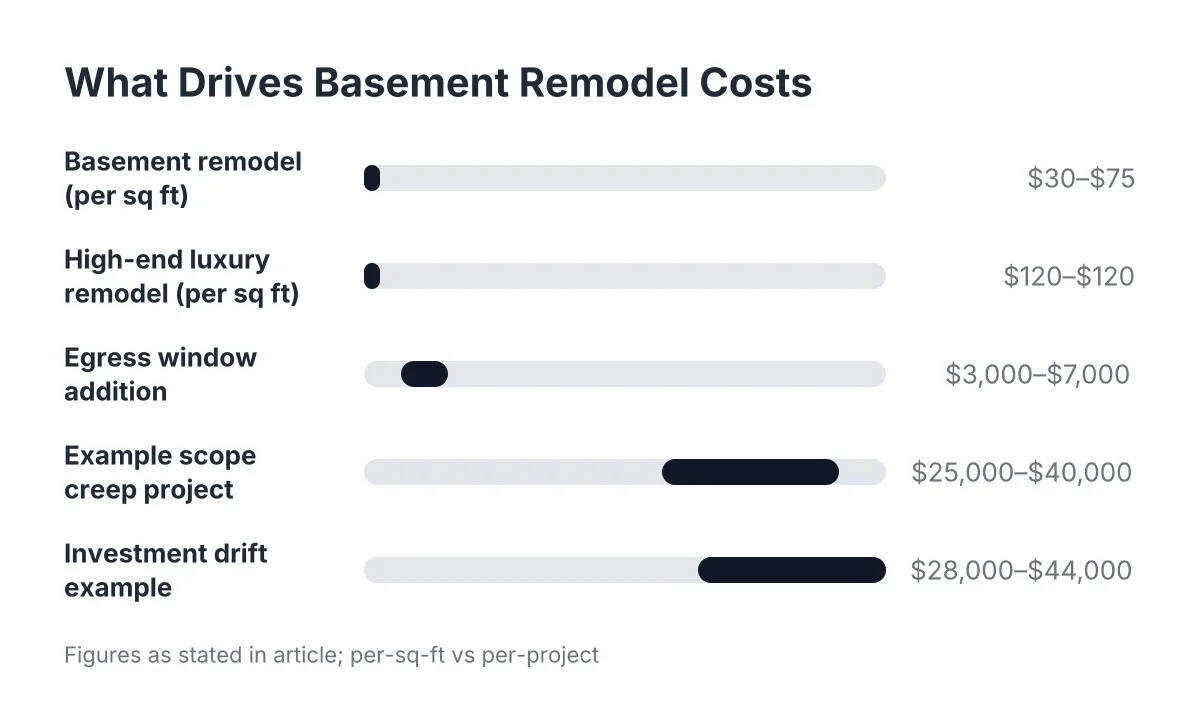
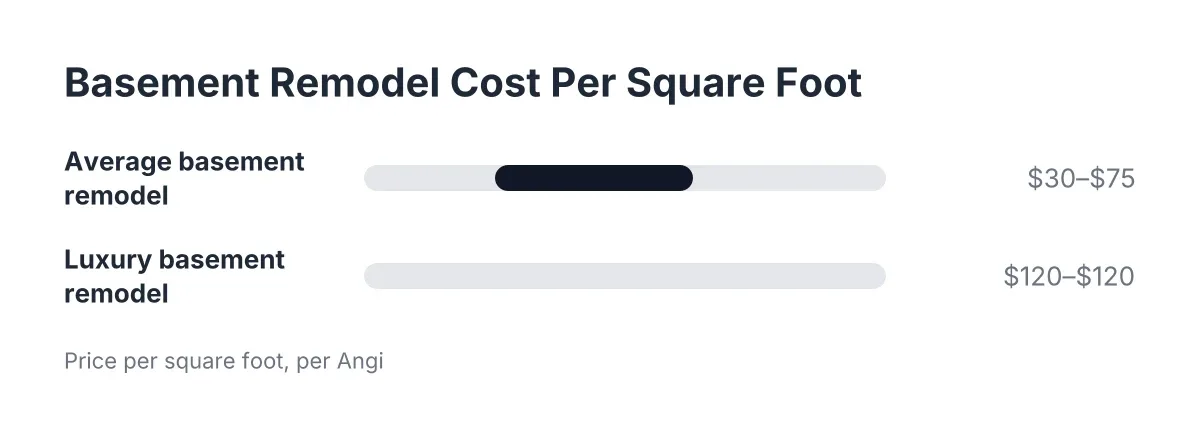
If you want a finished basement but the quotes you have seen made you wince, you have options. This guide covers affordable basement remodeling options for homeowners in Minneapolis, MN, with real numbers and plain answers instead of vague national averages. According to Angi, an average basement remodel runs $30 to $75 per square foot, and luxury projects can pass $120. The difference between the low end and the high end comes down to choices you control. Here are eight of them, in rough order of how much money each one saves.
One note before the list. Cheap and affordable are not the same thing. Skipping moisture work to save money in a Minneapolis basement is not affordable; it is a down payment on doing the whole job twice. Everything below assumes the basement is dry enough to finish, or that you fix the water issue first.
1. Finish the Whole Footprint, Not Just the Easy Corner
The most common budget mistake is finishing only the space on one side of the stairs and leaving the area at the bottom of the stairway as unfinished storage. That wastes the most usable square footage in the basement, the part everyone walks through. You pay for a remodel and still greet guests with a concrete floor and a water heater.
Instead, plan the full layout first, even if you build in phases. A smart basement layout puts storage in the awkward low-headroom zones and puts living space where people actually enter. Finishing 700 well-planned square feet beats finishing 500 poorly planned ones, often for less money per usable foot.
2. Keep the Plumbing Where It Already Is
Moving drains means cutting and breaking concrete, and that gets expensive fast. If your home has a rough-in for a basement bathroom, build the bathroom there, even if it is not your dream location. If there is no rough-in, weigh whether a basement bathroom belongs in this phase at all.
For example, suppose a Minneapolis homeowner has a rough-in near the laundry area but wants the bathroom on the far wall by the future bedroom. Relocating that drain line could add thousands in concrete cutting, plumbing labor, and patching. Using the existing rough-in keeps the same function at a fraction of the cost. A straight answer on this one question often saves more than any flooring or fixture decision.
3. What Are the Most Affordable Basement Remodeling Options for Flooring?
The most affordable basement flooring options that still hold up below grade are luxury vinyl plank, sheet vinyl, and carpet tiles over a proper subfloor or moisture barrier. These run well below hardwood or tile in both material and labor, and they handle the moisture swings a Minneapolis basement sees every spring.
Luxury vinyl plank has become the default for a reason. It is waterproof, it looks like wood, and if a section ever gets wet you can pull planks and dry things out. Carpet tiles work the same way; you replace a tile instead of a room. Avoid glue-down solid hardwood and anything that cannot survive a damp week in April.
One caution for anyone who has smelled must after rain: no flooring product fixes a moisture problem. A vapor barrier under the slab is meant to block ground moisture from moving into the concrete, according to W. R. Meadows, but older Minneapolis homes often lack one. If your slab wicks moisture, address that before any flooring goes down, or the smell comes back under whatever you install.
4. Choose an Open Layout Over Lots of Small Rooms
Walls cost money. Every partition means framing, drywall, mud, paint, electrical boxes, and often a door. An open family room with one bedroom and one bathroom almost always costs less than the same square footage chopped into four small rooms, and it feels bigger in a below-grade space.
In addition, open layouts help with the things that make basements feel like basements. Light travels farther, air moves better, and you avoid the cave effect. If you want a defined zone for an office or gym, consider a partial wall or furniture placement instead of a full framed partition with a door.
5. Spend on the Bones, Save on the Finishes
Here is the honest trade-off in any affordable basement remodel: the bones are not where you cut. Moisture control, insulation, framing, electrical, and egress are the expensive parts to redo later, so do them right the first time. Finishes like trim, fixtures, and built-ins are easy to upgrade in year three.
A few examples of where cheap and quality actually diverge:
- Do not cut: moisture and waterproofing work, insulation against the foundation, proper electrical, egress for any bedroom, and permits.
- Fine to save on: paint-grade trim instead of stained hardwood, standard drywall ceilings instead of specialty finishes, stock vanities, and builder-grade lighting you swap later.
- Skip for now: wet bars with full cabinetry, custom staircases, and heated floors. A dry bar with open floating shelves costs less than upper cabinets and makes the space feel more open anyway.
Permits belong on the do-not-cut list. Unpermitted work in Minneapolis can stall a sale or an appraisal, which defeats the point if resale value is part of your math.
6. Think Resale Math Before You Pick a Budget
Finished basements return real money at sale, but not dollar for dollar. The National Association of Realtors found 64% of basement finishing costs are recovered at sale, one of the higher returns among 20 projects studied. Returns vary widely by market, from 23% to 86% depending on region, according to Zonda and the Journal of Light Construction.
So what does that mean for your basement remodeling cost target? If resale is the main driver, aim for the clean middle of the market: durable flooring, neutral finishes, good lighting, and a legal bedroom if your home supports proper egress. A conforming bedroom adds counted square footage, which is where appraisers and buyers see value. The same NAR report gave basement finishing a joy score of 9.5 out of 10, so even at 64% recovery, homeowners rate it as money well spent while they live there.
7. Phase the Project Instead of Shrinking It
If the full project does not fit your 2026 budget, split it across phases rather than cutting quality everywhere. Phase one handles everything behind the walls: moisture work, framing, electrical, insulation, drywall, and flooring. Phase two adds the bathroom build-out, built-ins, or the under-stair wine storage once cash recovers.
This works because the expensive-to-redo items happen once. Opening finished walls later to add wiring or fix a moisture problem costs far more than roughing it in during phase one. Therefore, have your contractor rough in plumbing and electrical for future features even if you will not finish them this year. Timing matters too; when material prices are spiking, waiting a season for prices to settle can beat starting mid-spike.
8. Get Itemized Basement Remodeling Estimates, Not One Big Number
A single lump-sum price tells you nothing about where your money goes or where you could trim. When you gather basement remodeling estimates near me searches turn up, ask each contractor to break the number into line items: moisture prep, framing, electrical, insulation, drywall, flooring, bathroom, and finishes. An itemized estimate lets you compare bids honestly and cut specific items instead of guessing.
It also exposes the two failure modes homeowners in Minneapolis, MN run into most. The first is the lowball bid that omitted moisture prep and permits, which shows up later as change orders. The second is the inflated bid padded with work your basement does not need. If one estimate includes thousands in drainage work and another includes none, make both contractors explain why before you sign anything. A contractor who walks the basement with you and explains what they see, including whether your moisture situation needs a separate specialist first, is giving you the straight answer the sales pitch never will.
How Affordable Basement Remodeling Options Add Up: A Sample Budget
Say a homeowner in Minneapolis has an 800 square foot unfinished basement, a musty smell every spring, and a $40,000 ceiling. Here is an illustrative way these choices could play out, framed as rough estimates rather than a quote. Moisture evaluation and sealing work comes first, perhaps a few thousand dollars. The layout keeps the existing bathroom rough-in and uses one open living area plus one bedroom, saving framing costs. Flooring is luxury vinyl plank throughout.
In that scenario, the project could land near the middle of Angi's $30 to $75 per square foot range instead of the top. The homeowner gets a dry, permitted, fully finished footprint, with the wet bar and custom built-ins deferred to a later phase. The expensive mistakes, wet flooring and walls that hide an unsolved moisture problem, never happen.
When Affordable Is the Wrong Goal
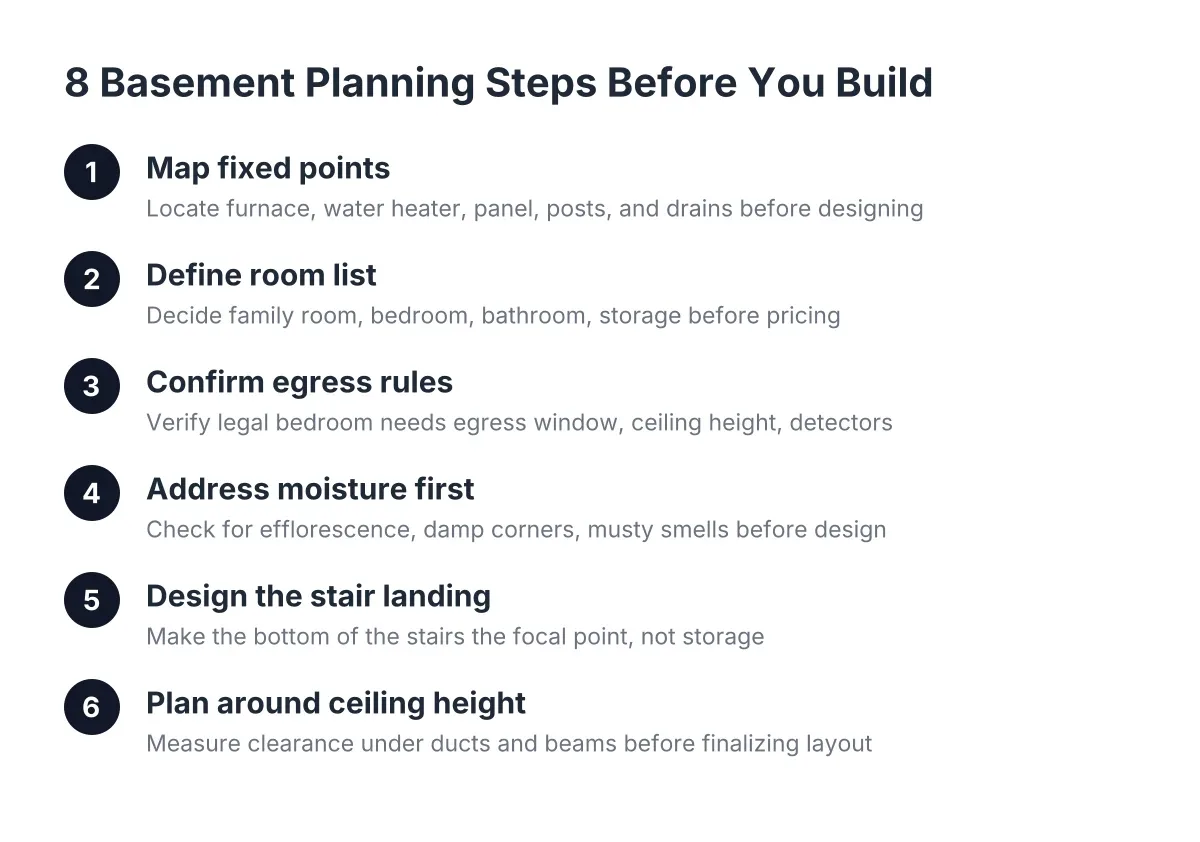
Two situations call for a professional opinion before you budget anything. First, if you have standing water, active leaks, or mold under old carpet, the moisture source has to be diagnosed and fixed before finishing makes sense; sometimes that is a separate waterproofing scope, sometimes the finishing contractor coordinates it. Second, if you want a legal basement bedroom, egress and code requirements must be verified for your specific house, and that is not a judgment call to make from an article.
The honest limitation of every tip above is that your basement sets the floor on cost. No layout trick makes an actively wet basement cheap to finish correctly. Get the moisture question answered first, get itemized estimates second, and then use these affordable basement remodeling options to decide where every remaining dollar goes.
Prefer to talk it through? Call (651) 758-8806 — a quick call is usually the fastest way to get a straight answer for your situation.